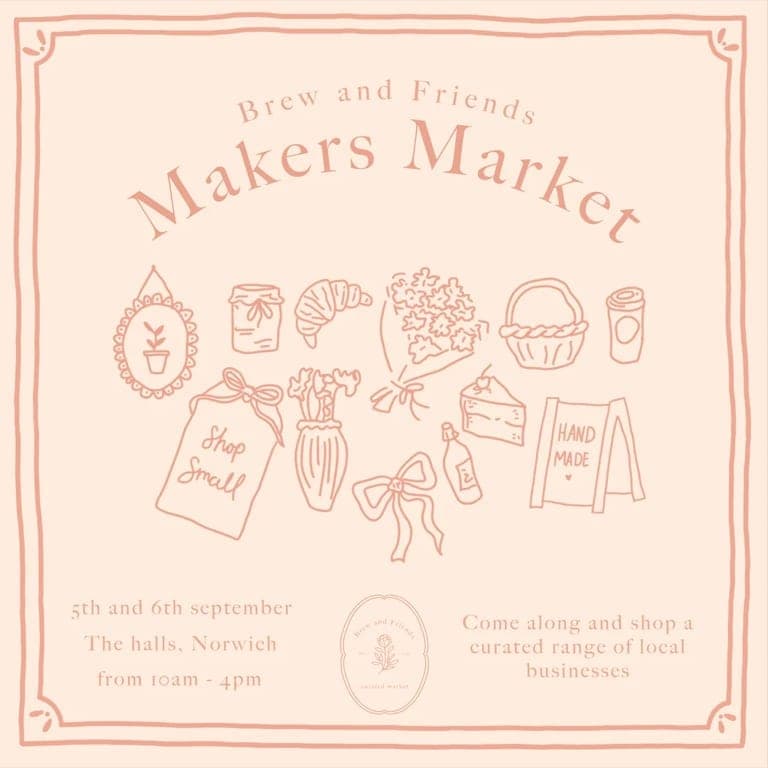
If you advertise a craft fair at £6 a ticket and the buyer pays £7.20 once a booking fee lands at the checkout, you are drip pricing, and drip pricing has been unlawful in the UK since the Digital Markets, Competition and Consumers Act 2024. The rule does not have a small-organiser exemption. It reads the same for a parish hall as it does for a global resale platform.
That is not a hypothetical. On 23 June 2026 the Competition and Markets Authority ordered StubHub UK to pay more than £590,000 in refunds to 51,350 customers, an average of about £10.33 each, and fined the company £889,200. The finding was narrow and worth reading closely, because the same shape of mistake is extremely common at the small end.
What StubHub actually did wrong
Not overcharging. Not hiding the total. The CMA's own summary of its case describes the failure as one of sequencing.
Between 6 April and 7 December 2025, some buyers were required to pay mandatory costs such as delivery and service fees, and those unavoidable fees were added at the final stage of the checkout rather than being included in the total price from the start. That is the breach. The customer found out eventually, but too late.
The CMA's price transparency guidance puts the principle in one line: it is illegal to hide additional fees, taxes or other charges that the customer will have to pay until later in the purchase process.
The three things small organisers get wrong
Thinking a fee is not mandatory because it feels like admin. The test is simple. The guidance says a charge is mandatory if the customer must pay it to buy the product, and names booking fees explicitly alongside delivery fees and taxes. If nobody can buy a ticket without paying your £1.20, it belongs in the headline price.
Genuinely optional extras are different and can still be shown separately. An upgrade, a programme, a next-day postage option: those are choices, not conditions.
Thinking the rules start at the checkout. They do not. The guidance applies to anyone who sells, advertises, markets or otherwise promotes a product at any point in the purchase process, from early-stage advertising to the final sale.
That reaches further than most people expect. The guidance lists an advert in a newspaper or on TV, online marketing such as an email or a social media post, and a page on your website as forms an invitation to purchase can take. And it adds that an invitation to purchase does not need to include an opportunity for the customer actually to buy. So a Facebook post reading "Autumn Craft Fair, £6 entry" is caught, even though nobody can buy anything from it.
Assuming the penalty scales down. It does not. The maximum is 10 per cent of turnover, or £300,000, whichever is greater. The floor does not shrink for a village hall. In practice the CMA is not going to chase a church fete, and nothing here suggests it would. But the rule is the rule, and "we are small" is not a defence written into it.
What the CMA says it is doing
Emma Cochrane, Executive Director of Consumer Protection at the CMA, framed the case as a warning to the wider market rather than a one-off.
Hitting customers with hidden fees is illegal. It's not fair to draw people in with what looks like a good deal, only for them to find the real price is higher when they get to the checkout due to extra charges that can't be avoided.
Her closing line is the one worth pinning above a desk, because it is addressed to every seller and not just the big ones.
Our message to businesses is simple: be transparent on costs or risk CMA action.
StubHub UK admitted breaking the law, settled early and received a 40 per cent reduction to its penalty as a result. The CMA's strengthened consumer powers came into force in April 2025, and it said at the time that it would tackle hidden fees along with other unlawful online pricing practices. Its running total under those powers now stands at more than £1.95 million secured in refunds and fines exceeding £5.7 million.
The fix takes an afternoon
This is a cheap problem to solve, which is the best argument for solving it before someone complains.
- Add up every charge nobody can avoid. Entry, booking fee, card fee, compulsory postage.
- Advertise that number. One price, everywhere: poster, Instagram, website, the listing you send to a local paper.
- Move optional extras out. Show them as add-ons, priced separately and clearly labelled as choices.
- Check what your ticketing platform displays, not just what you typed into it. If the platform adds its own fee at the last step, your £6 advert is wrong even though you never touched it.
- If you need a range, use a "from" price. That stays lawful as long as it includes all applicable mandatory charges and does not mislead about what it covers.
That last point is the one worth holding on to. Nobody is being asked to pretend a tiered event has a single price. The requirement is that whatever number you put in front of a customer is a number they can actually pay.
If you are selling tickets to your own event for the first time, our guide to card payments at a market stall covers the fees on the other side of the transaction, and we looked at the StubHub case itself in what the refunds mean for buyers.